
Tear-outs, widening & aprons
Concrete Driveways in Port Charlotte, FL
Driveways sloped for summer storms, sized for boats and trucks, and built to the county's apron and culvert rules.
- Free on-site measuring visit
- Written, line-by-line quote
- County permit and swale culvert planned before the pour
A Driveway That Sheds Water and Crosses the Swale Right
Concrete driveways in Port Charlotte do two jobs at once. They carry your cars, trucks and often a boat trailer, and they cross the roadside swale that drains your street. Most driveway problems we see come back to water: storms that run under slab edges and wash out the base, panels that drop beside the garage, and aprons that crack over a culvert pipe that has rusted or been crushed.
Signs it is time to replace
- Cracks wide enough to catch a coin, or cracks where one side sits higher than the other
- A panel near the garage or the street that has sunk and holds water
- Patches on top of patches, or old asphalt or shell showing through
- Tree roots lifting slabs along one side
- A driveway too narrow for today's vehicles or a boat
- A culvert at the street that is rusted, crushed or full of sand
A single sunken panel on a sound driveway can often be leveled, and surface wear can be resurfaced. When cracking, settling and drainage problems show up together, replacement usually costs less over the long run than repeated repairs.
What goes under the concrete
Most driveway failures start below the surface. We break out the old slab, remove soft or organic soil, and build a base that is compacted in layers. Forms are set so the finished surface falls toward the street and yard, away from the garage and the house.
Thickness follows use. HomeGuide's driveway guide calls for at least 4 inches for ordinary cars, 5 to 6 inches for RVs or heavy traffic, and 6 to 8 inches at the edges. If a boat, camper or work truck lives on the driveway, we thicken that area. Fiber mesh or rebar helps hold the slab together, and control joints on a planned grid give shrinkage cracks a straight, intended path.
The apron, the swale and the culvert
In unincorporated Charlotte County, the part of the driveway between your property line and the road sits in county right-of-way. The county requires a right-of-way permit for driveway installation, reinstallation or resurfacing there, with line-and-grade, pipe and final inspections. Its Engineering Design and Construction Standards set the details:
- A culvert pipe under driveways at construction or repair, sized by the county inspector
- A concrete apron of 4 inches of 3,000 PSI concrete with fiber mesh, a broom finish and joints
- At least 4 inches of compacted shell base under the apron
- A single driveway between 10 and 24 feet wide, at least 5 feet from the side lot line, with flares of no more than 3 feet per side
Right-of-way permit fees listed by the county run from $90 for a final inspection only to $310 when line and grade, pipe and final inspections are all needed. We fold the permit and culvert into the quote as separate lines.
Finish options
- Broom finish: the standard, with a light texture that grips in the rain.
- Exposed aggregate: the surface paste is washed away to show the stone, which hides tire marks and grips well.
- Stamped or colored borders: a decorative band along the edges with plain, easy-to-clean lanes for tires.
- Sealed finish: a clear sealer that helps resist oil stains, mildew and fading.
Caring for a new driveway
Keep cars off for at least 7 days and heavy vehicles off for 28 to 30 days, per HomeGuide. Keep the slab damp while it cures in hot weather. HomeGuide recommends sealing every 2 to 3 years. Point downspouts toward the lawn, keep the swale clear of sand and clippings so the culvert flows, and rinse off fertilizer and pool chemicals that land on the surface.
What the Driveway Price Covers
Each of these appears as its own line on the quote.
Demolition and hauling
The old concrete, asphalt or shell broken out and removed, plus soft soil underneath.
Base and grade
A compacted base and forms set so water falls away from the garage and house.
Reinforcement
Fiber mesh, wire or rebar matched to the slab size and what parks on it.
Pour and joints
Concrete placed, broom finished and jointed on a planned layout.
Apron and culvert
The right-of-way apron and culvert pipe built to Charlotte County standards and inspected.
Widening and pads
Extra lanes, flares, and side pads for boats, trailers or RVs, tied into the existing drive.
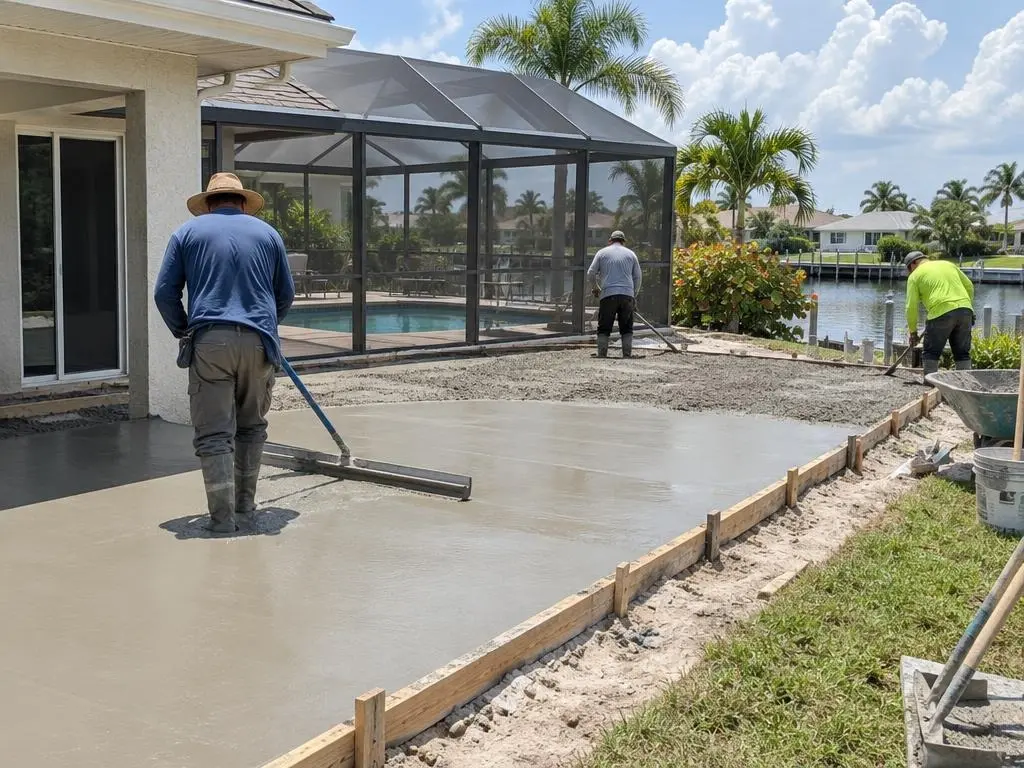
Typical Concrete Driveway Costs
| Item | Published range |
|---|---|
| Standard driveway, per sq ft installed | $6 to $10 |
| Basic decorative driveway, per sq ft | $10 to $15 |
| One-car, 12 x 24 ft | $1,700 to $4,300 |
| Two-car, 20 x 20 ft | $2,400 to $6,000 |
| Two-car, 24 x 24 ft | $3,500 to $8,600 |
| Old driveway removal, per sq ft | $2 to $6 |
| Sealing, per sq ft | $1 to $3 |
Figures from HomeGuide's concrete driveway cost guide (national averages). Charlotte County permit and culvert costs are extra and depend on the job. The written estimate after measuring is your price.
Start to Finish
1. Site visit
Measurements, a drainage and swale check, and a look at the culvert, then a written quote.
2. Permits
Right-of-way and flatwork permits submitted, with the line-and-grade inspection booked.
3. Tear-out and base
Old surface removed, culvert set if needed, base compacted and forms placed.
4. Pour and cure
Concrete placed, finished and jointed, kept moist, then final inspection and written care dates.
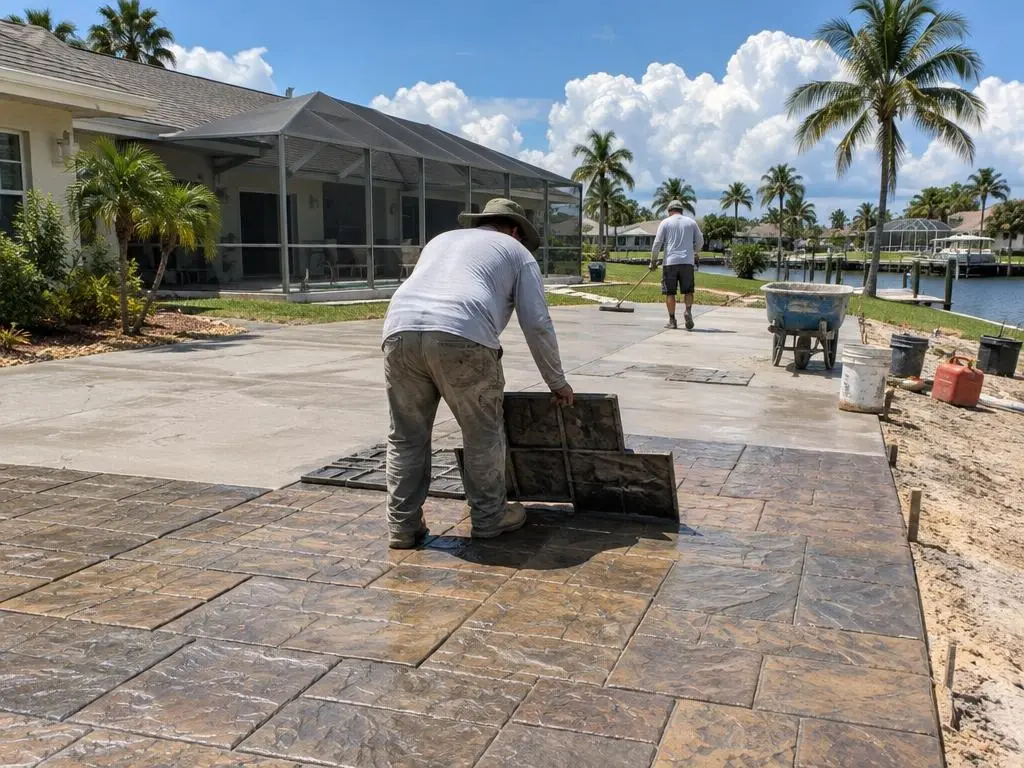
Why Choose Us for Concrete Driveways
Built for what you park
Extra thickness where boats, trailers or work trucks sit.
Swale and culvert covered
The right-of-way apron and pipe are part of the plan, not an afterthought.
Concrete Driveways Questions
How long does a concrete driveway last?
HomeGuide gives 30 to 40 years for a well-built, maintained concrete driveway. In Port Charlotte the base, drainage and regular sealing decide where in that range a driveway ends up.
Do I have to replace the culvert when I replace my driveway?
Charlotte County's standards require a culvert under driveways at construction or repair, sized by the county inspector. If the existing pipe is damaged or too small, it is replaced as part of the apron work.
How wide can my driveway be?
Under the county's Engineering Design and Construction Standards, a single residential driveway in the right-of-way can be 10 to 24 feet wide, at least 5 feet from the side lot line, with flares of up to 3 feet on each side. Wider parking areas can often be added on your side of the property line.
Can you pour new concrete over my old driveway?
We rarely recommend it. An overlay on a cracked, sunken driveway carries the same cracks and settling, and it raises the surface at the garage and the street. Removing the old slab and rebuilding the base is more reliable.
How soon can I park my boat trailer on it?
HomeGuide advises at least 7 days for cars and 28 to 30 days, the full cure, before heavy vehicles. We give you exact dates for your slab.
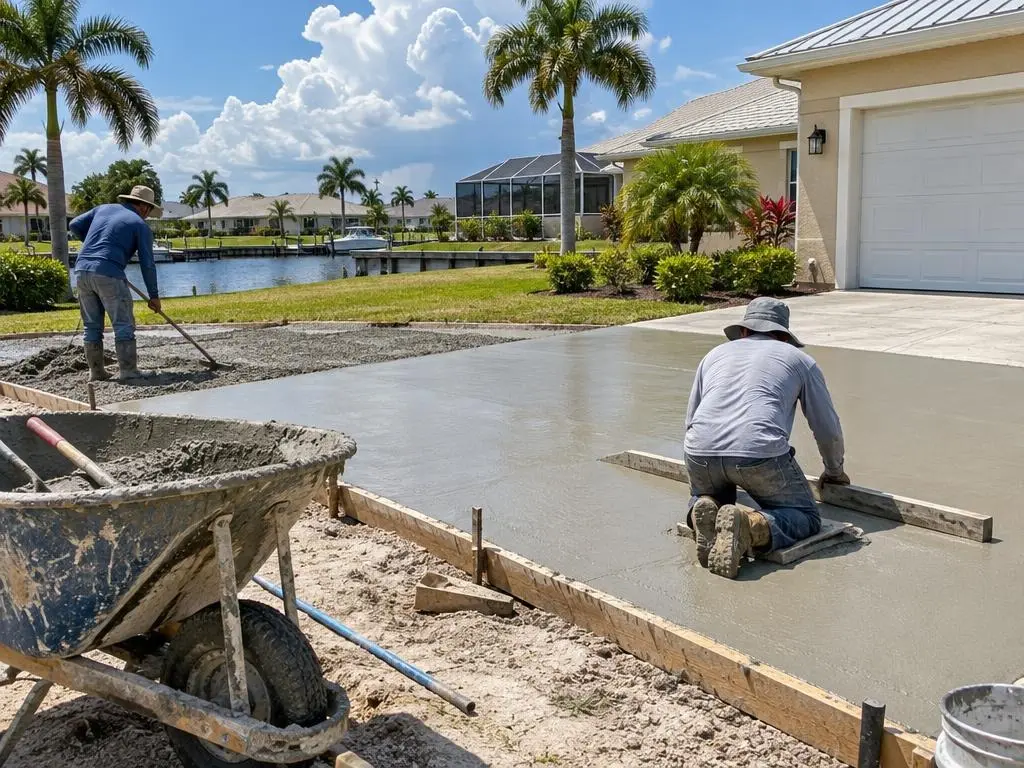
Concrete Driveways Service Areas
- Concrete Contractors in Port Charlotte, FL
- Concrete Contractors in Punta Gorda, FL
- Concrete Contractors in North Port, FL
- Concrete Contractors in Englewood, FL
- Concrete Contractors in Rotonda West, FL
- Concrete Contractors in Cape Coral, FL
- Concrete Contractors in North Fort Myers, FL
- Concrete Contractors in Venice, FL
- Concrete Contractors in South Venice, FL
- Concrete Contractors in Venice Gardens, FL
- Concrete Contractors in Warm Mineral Springs, FL
- Concrete Contractors in Harbour Heights, FL
- Concrete Contractors in Charlotte Harbor, FL
- Concrete Contractors in Charlotte Park, FL
- Concrete Contractors in Cleveland, FL
- Concrete Contractors in Solana, FL
- Concrete Contractors in Grove City, FL
- Concrete Contractors in Manasota Key, FL
- Concrete Contractors in Placida, FL
- Concrete Contractors in Boca Grande, FL
- Concrete Contractors in Babcock Ranch, FL
- Concrete Contractors in Burnt Store Marina, FL
- Concrete Contractors in Arcadia, FL
- Concrete Contractors in Fort Ogden, FL
Get a Concrete Driveways Estimate
We measure your driveway, check the swale and culvert, and price it in writing.